The ambient mind

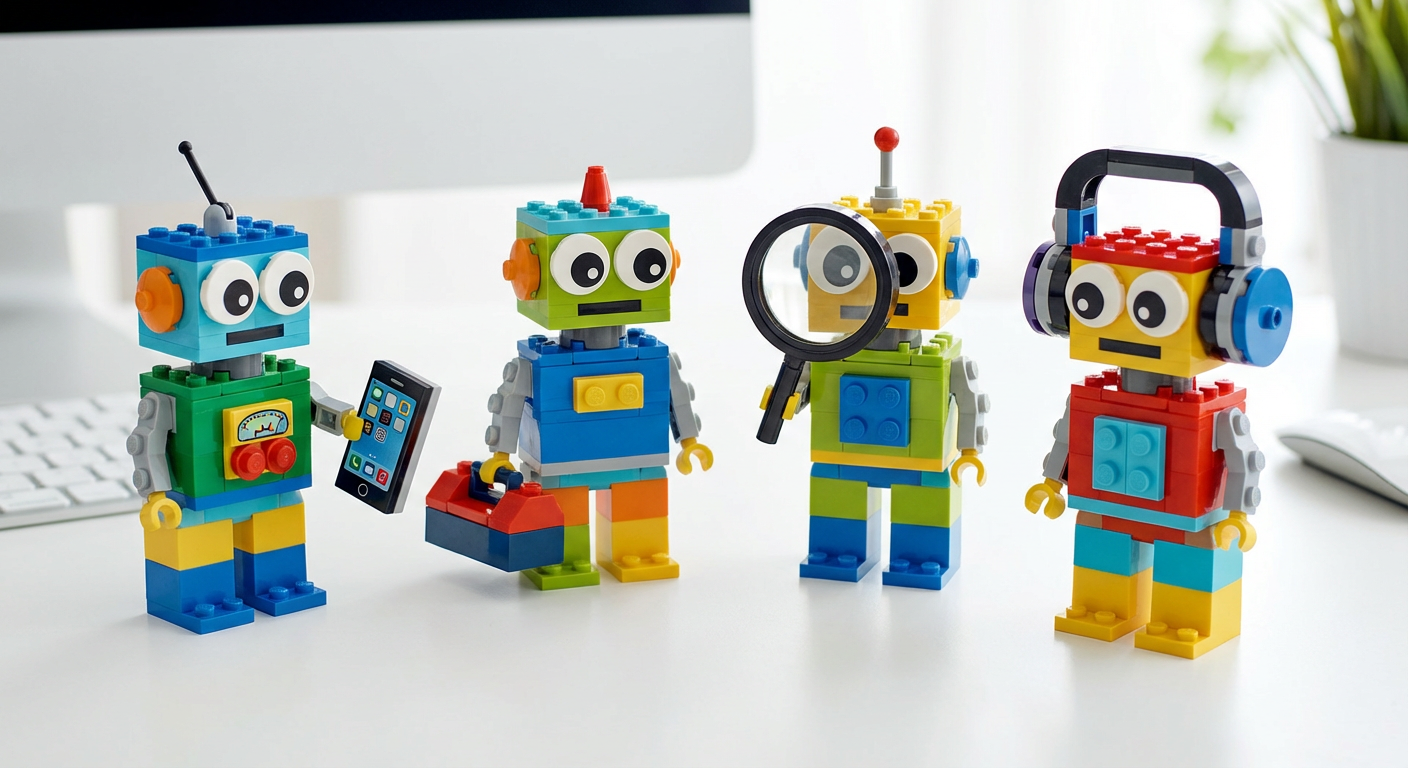
This morning, before my alarm went off, my agents a.k.a "claws" were up and here's what had already happened:
One claw checked my calendar, saw I had a meeting start at 9:30am tomorrow morning at my workplace, and told my car charger to delay charging by an hour, so it'd finish right before I leave, on the cheapest overnight rate. Another agent pinged the electricity provider's API, noticed peak rates were spiking this afternoon, and told my A/C to pre-cool the house using solar while my panels were still producing. A third one sat in our family WhatsApp group overnight, explained a medical report to my dad in Kannada at 10:00pm, while another agent generated a Lego version of an image my sister asked for before going to bed.
My wife's agent sent me a voice note at 12:30pm reminding me to eat lunch. An AI-generated voice. On a timer. The most domestic use of artificial intelligence I can think of.
A fourth agent had negotiated with my internet provider while I was at work; started a web chat, navigated the support options, made the case, got me a better rate. I didn't pick up the phone once, neither did I chat with a support associate.
None of these agents know about each other. They just do their thing. But together, they've quietly taken over the boring parts of my life.
I wired the agents together, gave them their jobs and titles. But I never had to teach them how to figure things out. They just adapt.
Here's what shifted and most people missed it: intelligence got cheap.
AI runs on tokens. Think of them as tiny units of intelligence. Two years ago, a meaningful conversation with AI cost real money. Today it costs fractions of a cent. The thinking itself became a commodity. And when thinking is cheap and available, it doesn't stay locked in labs or enterprise dashboards. It leaks into everything. Your thermostat. Your car charger. Your uncle's phone. Anything with a connection becomes a surface for intelligence.

We spent decades connecting devices to the internet and calling them "smart." They weren't smart. They were online. Now they're actually starting to think, reacting to context, making tradeoffs, adapting without being told.
2026 is the year that happened.
There's a philosophical trap with new technology: people wait to understand it before they use it. Nobody understood how electricity worked before they flipped a light switch. Nobody needed to.
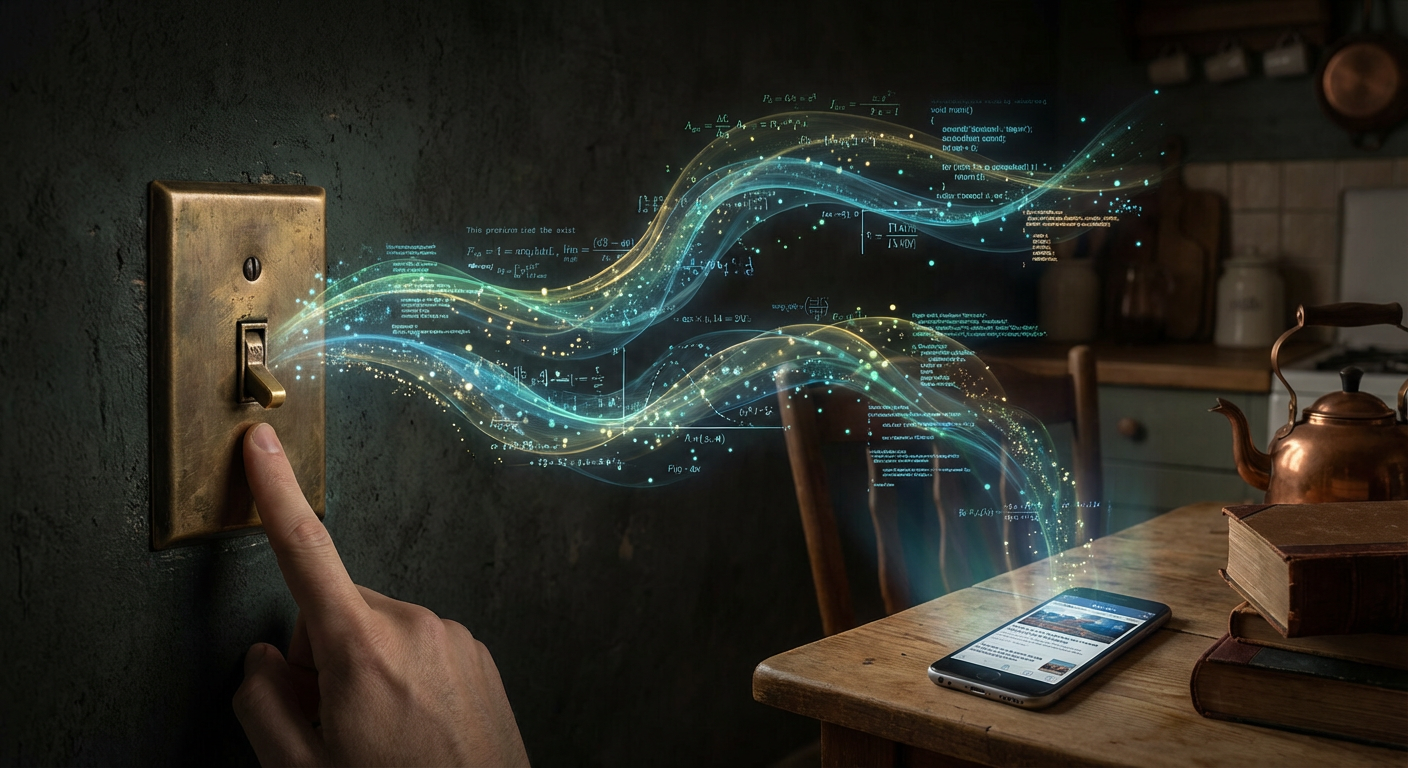
My dad has never read a word about language models. He asked the bot a question, got a helpful answer, and kept going. That's the entire adoption curve. Not a course. Not a tutorial. A single question.
The barrier is almost gone. You don't need to code. You don't need specialized hardware. The intelligence is already sitting on the phone in your pocket.
The next six months will see exponential growth in what these tools can do and who's using them. The gap between people who start now and people who wait isn't going to close. It's going to widen.
This is the part I think about the most. In the next few months, AI gets better at remembering your context, working offline, and handling tasks in the background before you think to ask. But that's just incremental. The real shifts are bigger.
Agents will handle your life admin. Bills, renewals, appointments, customer service calls, comparison shopping; the tedious stuff that eats hours every week. An agent that notices your insurance is expiring, compares options, and sends you a summary to approve. Not a fancy demo. Just your Tuesdays getting easier.
Every conversation becomes a capability. Right now, if you want to do something, you open an app. Soon, you'll just say it in any language, in any context, and an agent handles the rest. No app to find, no interface to learn, no form to fill. The conversation is the interface.
Your devices stop being dumb. We've had "smart" devices for years that were really just connected devices with a timer. Agentic AI makes them actually intelligent. Your home, your car, your appliances making real decisions based on real context. Multiply my A/C example across every device you own.
Multi-agent coordination becomes normal. Your agent talks to the restaurant's agent to book a table. Your agent talks to your friend's agent to find a time. Your agent negotiates with your service provider's agent to get you a better deal. Agent-to-agent communication is coming, and it's going to feel as natural as texting.
And then: humanoids. The same agentic AI but reasoning, adapting, taking action and stepping into a physical body. Robots that problem-solve on factory floors. Cars that negotiate traffic. Home robots that fold laundry and check on your grandparents. Everything we're seeing today will look like a warmup.
AI isn't replacing your life. It's fitting into it.

Six months from now, the things I'm describing won't sound futuristic, they'll sound obvious. A year from now, people who haven't started using AI in their daily lives will feel the gap. Not because AI is threatening, but because life around them will be moving at a much faster pace.
This isn't a race against machines. It's about working with them. The same way calculators didn't replace mathematicians and spreadsheets didn't replace accountants; they just made them better. AI agents are the next version of that. A layer of intelligence that handles the noise so you can focus on the signal.
You don't have to understand how it works. You just have to start. Ask it a question tomorrow morning. Give it a task you've been putting off. Let it surprise you.
The machines aren't waiting. The world built around them isn't waiting either.